

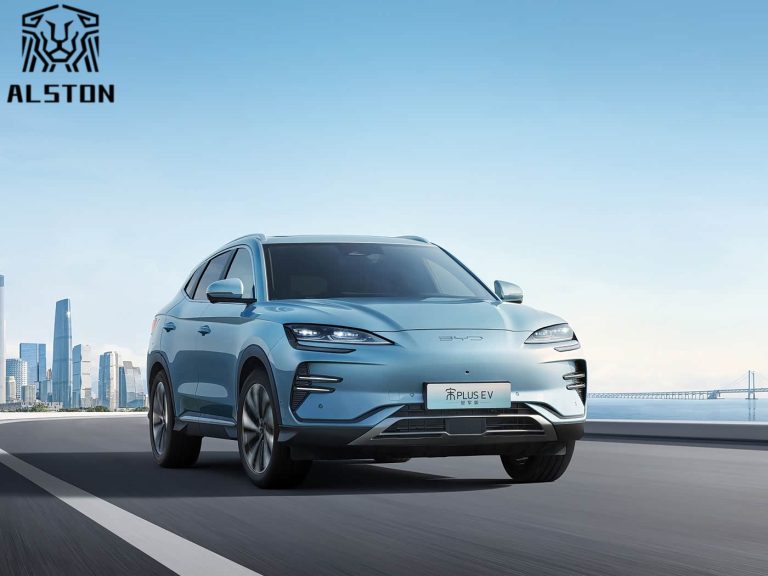
Chinese EVs Now Lead Dubai’s Electric Car Market as 200 Ultra-Fast Chargers Roll Out
By Alston Motors | alstonmotors.com | 26 March 2026
Table of Contents
- Overview
- Chinese Brands Now at the Centre of Dubai’s EV Market
- The Chinese Models Making the Biggest Impact
- Dubai’s Charging Infrastructure Catches Up
- Why This Matters for Buyers
- Sources
Overview
Dubai’s electric vehicle market has reached a turning point in March 2026. Chinese brands — led by BYD and Zeekr — are no longer niche imports. They are now the primary challengers to Tesla across the emirate’s expanding EV landscape, with new models verified at UAE dealer prices this month and a city-wide ultra-fast charging rollout actively underway. For buyers in the market for a Chinese electric vehicle, the timing has never been better.
Chinese Brands Now at the Centre of Dubai’s EV Market
A comprehensive ranking of Dubai’s top electric vehicles, published this week with prices verified from UAE dealer listings in March 2026, confirms that Chinese manufacturers now occupy several of the most competitive positions in the market. BYD, Zeekr, and Geely brands are regularly listed alongside — and in some cases above — Korean and European rivals on range, value, and technology grounds.
This shift reflects a broader regional trend. According to global consulting firm AlixPartners, Chinese automotive brands are forecast to capture 34 percent of the Middle East and Africa automotive market share by 2030, up from just 10 percent in 2024. Consumers in the UAE have shown a notably rapid shift in trust toward Chinese brands, driven by competitive pricing and improving technology.
Dubai currently has more than 40,000 electric vehicles on its roads, and the market continues to accelerate. The UAE government’s Net Zero 2050 strategy includes a target for 50 percent of all vehicles to be electric by that date, with Dubai’s Roads and Transport Authority separately targeting a significant share of government and public transport vehicles to be electric or hybrid by the end of this decade.
The Chinese Models Making the Biggest Impact
The BYD Atto 3 remains the best-selling Chinese EV in the UAE. It is priced from AED 149,900 and features BYD’s Blade Battery, 201 horsepower, and a claimed range of around 420 km under real UAE driving conditions. An eight-year battery warranty backs every unit sold through Al-Futtaim.
The Zeekr 7X, new to the UAE market this year, starts at AED 169,900. It is built on Geely’s 800-volt architecture, delivers 543 km of manufacturer-rated range on a 100 kWh battery, and in the Performance trim produces 646 horsepower. Prices verified this month from UAE dealer listings show both Standard and Performance variants are in stock. Independent reviewers note it as a credible alternative to the Tesla Model Y for buyers who prioritise range and performance at a similar price.
The Geely EX5, also new to Dubai, offers a practical compact SUV option at a lower entry price and shares platform engineering with Volvo and Zeekr through the Geely Group’s Global Intelligent Electric Architecture.
Further up the range, the BYD Yangwang U9 and the newly revealed Zeekr 8X hybrid SUV — with its 1,400 horsepower hybrid powertrain and sales expected to begin in the second quarter of 2026 — signal that Chinese manufacturers are also competing seriously in the premium segment.
Dubai’s Charging Infrastructure Catches Up
The single most consequential development for EV buyers in Dubai right now is the active rollout of 200 ultra-fast Direct Current charging stations across the emirate. Parkin, Dubai’s primary paid parking operator, signed a 10-year agreement with charge&go — a subsidiary of the technology group e& — to deploy the network. Phase one delivered 20 stations at high-traffic locations. The full 200-station network is being completed within a 12-month window from the October 2025 launch date.
Each DC charger is rated to bring an EV from 10 to 80 percent charge in under 30 minutes — compared to several hours on conventional alternating current systems. Charging bays are bookable through Parkin’s mobile application, which also provides real-time status updates and in-app payment. The network operates under a strict park-and-charge protocol, meaning bays cannot be occupied unless a vehicle is actively charging.
Separately, Dubai Electricity and Water Authority’s EV Green Charger programme has added hundreds of additional AC and DC charging points across Dubai and Abu Dhabi, bringing the emirate’s total installed base past 1,270 points as of mid-2025, with further expansion ongoing.
The combination of the Parkin/charge&go ultra-fast network and the DEWA rollout means Dubai’s charging map is changing faster than any other city in the region. For buyers of Chinese EVs — which almost universally support DC fast charging — this removes the last major practical barrier to adoption.
Why This Matters for Buyers
Three factors are converging in Dubai’s favour for Chinese EV buyers right now. First, several competitive Chinese models — BYD, Zeekr, Geely — are in stock at UAE dealerships with verified March 2026 prices. Second, the charging infrastructure is actively expanding, with 200 ultra-fast DC chargers going live across the city. Third, government incentives remain in place: EV owners in Dubai benefit from reduced registration fees, free Salik toll access, and designated parking concessions.
For buyers specifically considering Chinese electric vehicles, the practical question of where to charge has a clearer answer today than at any point in Dubai’s EV history. The market has reached a threshold — not just in terms of the vehicles available, but in the infrastructure needed to support daily use.
Sources
- tbreak.com — Best Electric Cars UAE 2026: Top EVs Ranked (March 2026, prices verified)
- Economy Middle East — Parkin to roll out 200 ultra-fast EV charging stations in Dubai with charge&go
- Gulf News — Parkin & e&: 200 ultra-fast chargers, under 30 minutes
- DubiCars — Top 10 Chinese Cars Launching in 2026 (March 12, 2026)
- Gulf News — Chinese electric vehicles accelerate into UAE as market share soars
- Khaleej Times — 116 million electric vehicles to hit roads globally in 2026; UAE incentivises drivers to switch
- RentCarUAE — Zeekr 8X Interior Revealed: New 1400 HP Hybrid Luxury SUV Launching in 2026
- DubiCars — 200 New Fast EV Chargers in Dubai from Parkin and e&